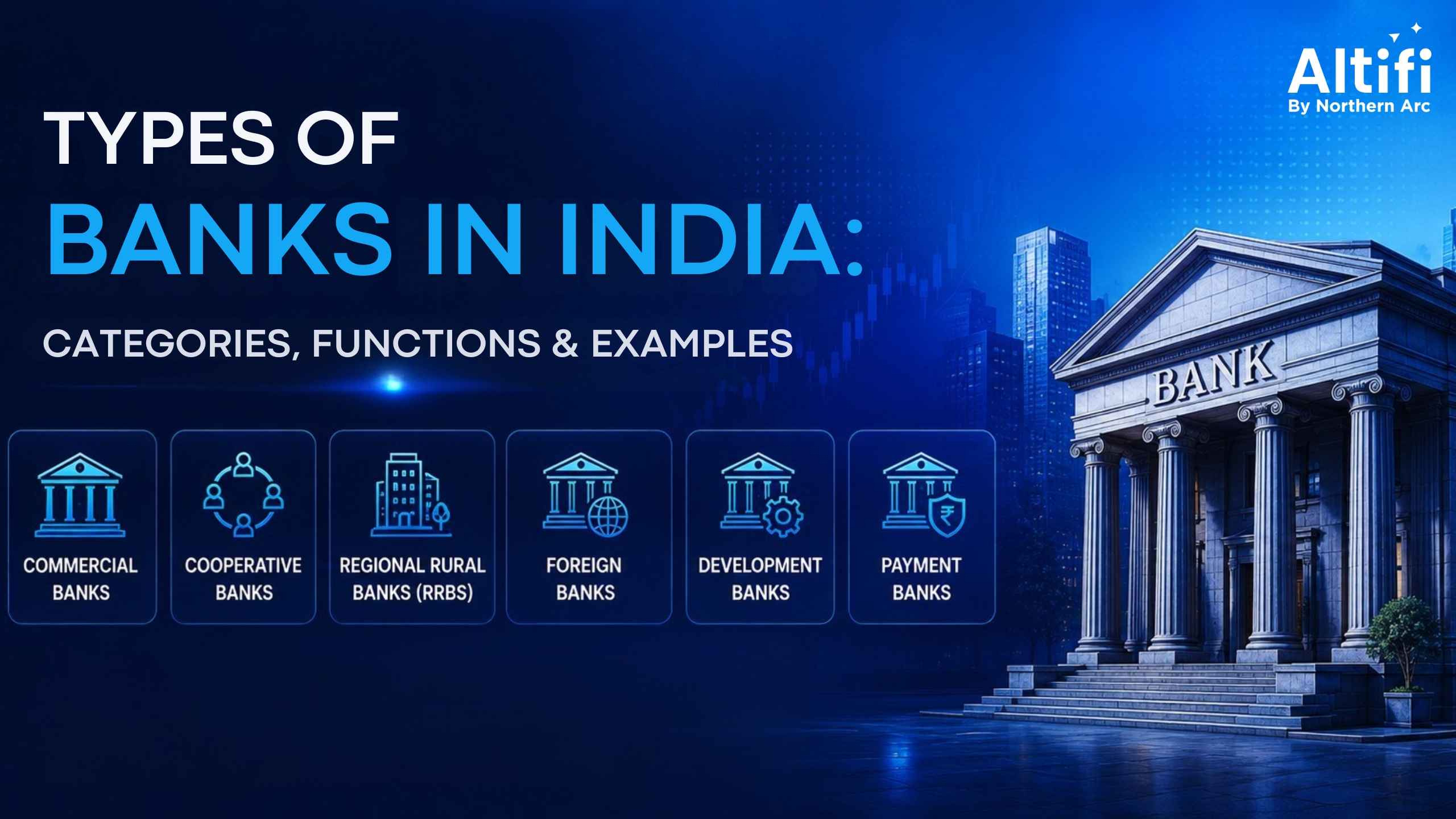
India has an diverse banking system, where each type of bank has its own specific function to perform. Public sector banks provide regular banking services while also participating in various government schemes and financial inclusion programmes. A payment bank provides small savings accounts and mobile transfers. Co-operative banks primarily serve local communities, including farmers, small businesses, and individuals in specific regions. Here is an overview of all the major categories of banks prevailing in India, ranging from the RBI on the top to specialised banks on the lower end, along with their respective functions.
How are Banks Classified in India?
The banking system in India can broadly be classified into Scheduled Banks and Non-Scheduled Banks based on their inclusion in the Second Schedule of the Reserve Bank of India Act, 1934.
Scheduled banks are banks listed in the Second Schedule of the Reserve Bank of India Act 1934. They broadly comprise:
- Scheduled Commercial Banks: Public Sector Banks, Private Sector Banks, Foreign Banks, Regional Rural Banks (RRBs), Small Finance Banks, and Payments Banks.
- Scheduled Co-operative Banks: Urban Co-operative Banks and State or District Co-operative Banks that are included in the Second Schedule.
Non-Scheduled Banks are banks that are not included in the Second Schedule of the RBI Act. Only a small number of banks fall under this category.
Thus, the classification is based primarily on whether a bank is included in the Second Schedule, while further categories depend on the type and nature of the banking institution.
What are the Different Types of Banks in India?
Here is each category that makes up the Indian banking system, with real examples in each group.
Reserve Bank of India (RBI)
The RBI is the central bank of India and is placed above all other banks. The Reserve Bank of India was established in 1935. It issues currency notes, implements the interest rate regime and regulates banks and certain other financial institutions. The RBI does not provide retail banking services or accept deposits from the general public. Instead, it acts as the banker to the Government of India and state governments.
Commercial Banks
The commercial banks accept deposits and make loans to individuals as well as to firms. They operate under the RBI's Banking Regulation Act of 1949, which includes public sector banks, private sector banks, foreign banks and regional rural banks (RRBs). However, certain categories of RRBs and Small Finance banks have separate regulatory classifications and mandates. Day-to-day banking services takes place in these commercial banks through savings accounts, fixed deposits, and personal loans.
Public Sector Banks
Public sector banks are commercial banks wherein the Government of India holds more than 51% share. There are 12 public sector banks in India including SBI, Punjab National Bank, Bank of Baroda, Canara Bank, etc. Single biggest bank in India in terms of assets is SBI having more than 22,500 branches.
Private Sector Banks
These banks are owned privately as opposed to being owned by the government. The private sector banks in India are 21 scheduled banks that include both the old institutions like Federal Bank and the new institutions such as HDFC, ICICI, and Axis Bank that were formed after the 1990s financial reforms. These banks have been recognised for digital technology and faster account opening.
Foreign Banks
Foreign banks are headquartered abroad but have branches/operations in India through the permission of RBI. The foreign banks in India include Citibank, HSBC, and Standard Chartered. They are used to serve corporate clientele.
Regional Rural Banks (RRBs)
The Regional Rural Banks (RRBs) are set up in 1975 to provide banking services to rural and semi-urban areas. The RRBS are owned by the central government, the state government, and the sponsoring bank. There are about 28 Regional Rural Banks in India.
Co-operative Banks
Co-operative banks are owned and operated by its own members, usually belonging to a particular community or district. They can be classified as urban or rural co-operative banks, which provide credit facilities to farmers, small traders, and local businessmen.
Small Finance Banks
Small finance banks were permitted by RBI to extend formal credit to small businesses, farmers, and poor families, which were being ignored by large banks. There are 11 small finance banks in India, including AU Small Finance Bank and Equitas Small Finance Bank, providing microfinance and priority sector lending.
Payments Banks
Payments banks accept deposits up to the limit prescribed by the RBI from time to time, but do not extend loans or issue credit cards. India has 5 payments banks licensed by RBI, including Airtel Payments Bank and India Post Payments Bank, whose aim is to extend banking services in areas lacking bank branches.
Local Area Banks
Local area banks are private banks functioning in a limited geographical area of two to three districts. Local area banks were established in 1996 to promote local businesses and agriculture. Only a few local area banks are functional now, because others have merged into larger banks or converted into small finance banks.
Specialised Banks in India
Specialised banks serve a particular sector rather than the general public. Examples include EXIM Bank for foreign trade finance, NABARD for farm credit, and SIDBI for MSME funding.
Key Functions of Different Types of Banks
- Deposits: Savings, current, and fixed deposits across commercial and co-operative banks
- Lending: Home loans, personal loans, business credit, and farm finance
- Payments: UPI, NEFT, RTGS, and card transactions via commercial and payments banks
- Financial inclusion: RRBs, co-operative banks, and small finance banks reach customers outside major cities
- Trade finance: Foreign banks and specialised banks such as EXIM Bank support exporters
- Supervision: The RBI sets interest rates, manages inflation, and regulates every bank type above
Conclusion
India's banking structure comprises various layers where the RBI formulates the guidelines and each category of banks caters to one particular need – rural lending, foreign exchange transactions, saving deposits, and day-to-day transactions. A private bank operating in a metropolitan area and a co-operative bank functioning in an agricultural belt are regulated by the same entity, yet cater to different clientele. Selecting the right type of bank based on its purpose – whether you require stability through a public sector bank or a payments bank for speedy transactions – can help you choose the right bank.
FAQs on Types of Banks in India
What is the role of the Reserve Bank of India (RBI)?
RBI is responsible for regulating India's banking system, issuing currency, setting interest rate policy, and handling inflation. It oversees all scheduled banks in addition to being a banker to the government.
How many banks are there in India?
There are 12 public sector banks, 21 private sector banks, 44 foreign banks, 11 small finance banks, 5 payment banks, and 28 regional rural banks in India, apart from cooperative banks.
What are Small Finance Banks in India?
These are licensed banks by RBI providing savings, deposits, and small loans services with emphasis on farming, micro-enterprises, and poor sections of society. India has 11 such banks.
How do Payment Banks differ from regular banks?
Payment bank only accepts limited deposits and facilitates transfers and payments; it does not provide loan facilities or issue credit cards like commercial banks do.
What services do cooperative banks offer?
Co-operative banks provide savings account facilities, fixed deposits, and loans primarily to farmers, small-scale traders, and localities.
Which is the largest bank in India?
State Bank of India (SBI) is the biggest bank of India, which operates more than 22,500 branches all over the country.
What are the types of banks in India?
The major types of banks in India include RBI, commercial banks (public sector, private sector, foreign), regional rural banks, co-operative banks, small finance banks, payments banks, local area banks, and specialised banks.
How many banks are in India?
In India, taking all types of banks into consideration – scheduled banks, co-operative banks, and specialised banks – India has a number of banking institutions.
Disclaimer:
The information contained in this newsletter (“Newsletter”) is for general informational purposes only. Northern Arc Capital Limited (“Northern Arc”) does not make any warranties about the completeness, reliability, and accuracy of this information. Any action you take upon the information contained in this Newsletter is strictly at your own risk, and Northern Arc will not be liable for any losses and damages in connection with the use of our Newsletter.
The data included in this Newsletter has been obtained from sources that are believed to be reliable and accurate at the time of publication. However, Northern Arc does not guarantee the accuracy or completeness of any information, nor does it assume any responsibility or liability for any errors or omissions therein. Any opinions expressed herein are subject to change without notice and Northern Arc is under no obligation to update or keep current the information contained in this Newsletter.
This Newsletter is not intended to constitute, and should not be construed as, investment advice or a recommendation to purchase, sell, or hold any security or to engage in any investment strategy or transaction. Readers should not rely solely on the information provided in this Newsletter for making investment decisions and should conduct their own due diligence or seek the advice of a qualified professional.
The content of this Newsletter is for informational purposes only and is not a solicitation or an offer to buy or sell any securities or financial instruments. Northern Arc is not responsible for any investment decisions made by the recipients of this Newsletter. Readers should take independent financial advice from a qualified professional in connection with, or independently research and verify, any information that is provided in this Newsletter and wish to rely upon, whether for the purpose of making an investment decision or otherwise.
Northern Arc and its affiliates, directors, employees, and agents expressly disclaim any and all liability for any direct or indirect losses, damages, or expenses of any kind arising out of or relating to the use of this Newsletter, including but not limited to, any losses related to the accuracy, completeness, timeliness, or reliability of such information.
This Newsletter may contain forward-looking statements that are based on current expectations, estimates, forecasts, and projections about the markets in which Northern Arc operates, as well as management’s beliefs and assumptions. Forward-looking statements are not guarantees of future performance and involve certain risks and uncertainties, which are difficult to predict. Past performance is not indicative of future results.
This report is intended solely for the recipient and is not for further circulation. Any distribution, modification, reproduction, or disclosure of the contents of this Newsletter, in whole or in part, without the prior written consent of Northern Arc, is strictly prohibited.