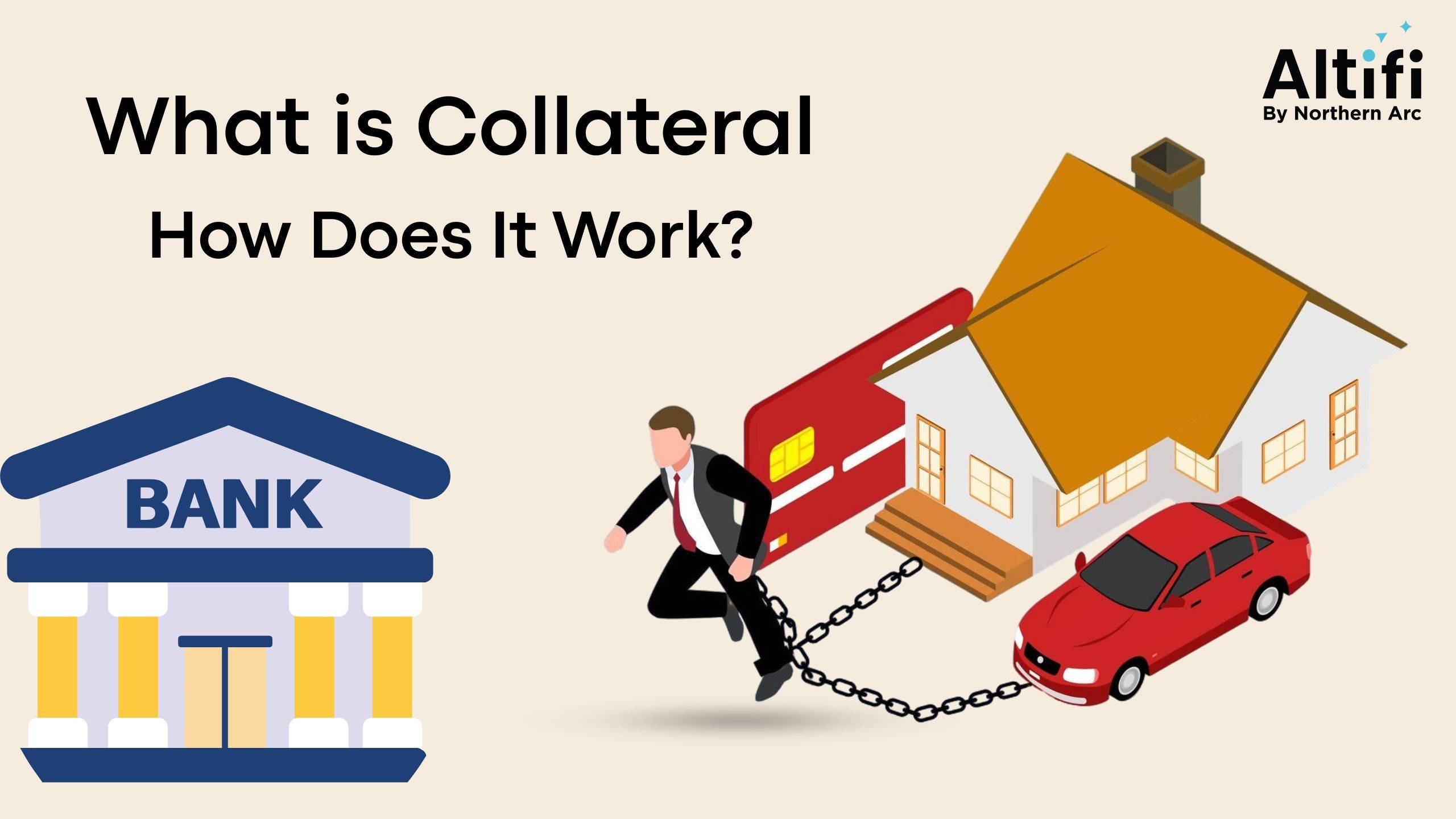
Collateral is an asset that borrowers provide as security against a loan. If the borrower defaults, the lender can seize it to settle the loan. So, it is important because it affects the interest rate of a loan.
Collateral is about risk allocation, rather than procedure. The loan applicant receives the capital, and the lender receives security. It's what makes most lending arrangements work. Here's everything you need to know about collateral meaning, function and more.
Understanding Collateral in Simple Terms
Collateral is an asset of the borrower, such as real estate, gold or a fixed deposit, used by a lender as security for a loan. In case of default, the lender can then repossess and sell the asset to recoup the loan. The asset remains with the borrower or can be used to make repayments during the loan period if the borrower makes timely repayments.
Lending money always carries risk. A borrower's credit score and income proof help, but they don't remove the possibility of default. Collateral gives the lender a fallback. If repayment stops, the lender has some assurance; there's a tangible asset backing the loan. This reduced risk is exactly why collateral-backed loans tend to carry lower interest rates than unsecured options like personal loans.
How Does Collateral Work?
The collateral is a straightforward concept. The way collateral works in an Indian loan is as follows:
- The borrower selects an asset to collateralise, such as real estate, gold, a fixed deposit or securities.
- The lender assesses the asset's value with an independent valuer or its own team.
- The lender sets the loan-to-value ratio (LTV) and loan amount based on this.
- The asset is put under a lien, so the borrower cannot sell or take it out of the country until the loan is paid back.
- The lender removes the lien once the borrower pays back the loan (plus interest).
Common Types of Collateral
Collateral can take different forms depending on the loan type. Some of the more common ones include:
Property (Real Estate)
Residential or commercial property is widely used. These assets tend to have relatively stable value, which makes them suitable for larger loans.
Vehicles
Cars and two-wheelers are often financed with the vehicle itself as collateral. The lender holds a legal claim until repayment is complete.
Financial Assets
You can also pledge some fixed deposits, shares, mutual funds or bonds. This is often done for short-term cash requirements.
Gold and Jewellery
Gold loans are quite common. The loan amount is typically linked to the current market value of the gold pledged.
Business Assets
For business loans, machinery, inventory, or even receivables may be used as collateral.
Secured vs Unsecured Loans
The table below shows the difference between secured vs unsecured loans
| Parameter | Secured Loan | Unsecured Loan |
|---|---|---|
| Collateral required | Yes | No |
| Interest rate | Lower (typically 8–12%) | Higher (typically 11–24%) |
| Loan amount | Higher (depends on asset value) | Lower (depends on income) |
| Approval speed | Slower (asset valuation needed) | Faster |
| Risk to borrower | Asset can be seized on default | No asset risk, but legal action possible |
| Examples | Home loan, gold loan, loan against FD | credit card loan |
Benefits of Using Collateral
Collateral isn't just a security deposit; it plays an important role in the loan process.
- It may improve the chances of approval
- May qualify for comparatively lower rates
- It can provide higher loan limits
- It could have longer loan tenures
Often, borrowers underestimate the impact of these factors on the cost of borrowing.
Risks Associated with Collateral
Collateral also comes with its responsibility.
If the loan is not repaid in accordance with the terms, the lender can seize the collateral to satisfy the loan. That may result in the loss of ownership or control over a valuable asset.
However, this doesn't happen immediately. There is usually a process. But when it does, it can be hard to stop. So, while having collateral makes it easier to borrow, it also makes it riskier.
Real-World Example
Now, let's consider that a borrower borrows ₹50 lakh and uses a house that is valued at ₹65 lakh as collateral. This means the collateral will be approximately 130% of the loan amount, a fairly standard rate of secured lending.
Everything goes smoothly as long as the borrower pays the monthly EMI of around ₹44,000 on time. In reality the collateral remains hidden and has no impact on the daily use of the property by the borrower.
If the borrower stops making EMIs. The lender may consider the account as a default case if repayment is not made for 3-6 consecutive months, or if the amount borrowed is overdue by around ₹2.5–3 lakh. The lender typically starts with notifying, reminding and warning the borrower at that point.
Many times, banks may also offer restructuring or temporary relief before taking stricter action.
However, if the default continues for a prolonged period, the lender may use the collateral property for debt recovery through legal sale or auction. The recovered amount is generally used to clear:
- Outstanding loan balance
- Pending interest
- Late payment penalties
- Recovery and legal expenses
The collateral might remain inactive when repayments are regular. But it may become important once the borrower fails to meet repayment obligations for an extended period.
Key Factors Lenders Consider
When assessing collateral, lenders look beyond just the asset itself.
- Its current market value
- How easily it can be sold
- Whether ownership is clear and documented
- How stable its value is over time
These factors influence not just approval, but also how much can be borrowed and at what terms.
Conclusion
Collateral is a term that refers to an asset placed against a loan in order to protect the lender in the event of a default. The interest rate, loan amount and loan period will vary depending on the type of collateral property, gold, fixed deposits or securities. Knowing the updated RBI guideliens, borrowers may make an informed and affordable borrowing decision and opt for an FD as collateral.
FAQs on What is Collateral
What can be used as collateral for a loan?
Typically, property, gold, fixed deposits, vehicles, or financial investments can be used as assets.
Will the collateral be transferred during the loan tenure?
No, it is not the property of a third party. Until the loan is paid off, however, the lender has a “legal claim” to the asset.
Can I use the same collateral for multiple loans?
In most cases, no. Pledged assets can't be used again until the lender says they can be reused partially.
What happens to collateral after full repayment?
The lender removes the lien and gives you full back-end ownership of the asset.
Is collateral required for every loan?
Secured debt does not need to have any assets for collateral; however, it generally will have higher interest rates and more stringent qualification requirements.
Disclaimer:
The information contained in this Article (“Article”) is for general informational purposes only. Northern Arc Capital Limited (“Northern Arc”) does not make any warranties about the completeness, reliability, and accuracy of this information. Any action you take upon the information contained in this Article is strictly at your own risk, and Northern Arc will not be liable for any losses and damages in connection with the use of our Article.
The data included in this Article has been obtained from sources that are believed to be reliable and accurate at the time of publication. However, Northern Arc does not guarantee the accuracy or completeness of any information, nor does it assume any responsibility or liability for any errors or omissions therein. Any opinions expressed herein are subject to change without notice and Northern Arc is under no obligation to update or keep current the information contained in this Article.
This Article is not intended to constitute, and should not be construed as, investment advice or a recommendation to purchase, sell, or hold any security or to engage in any investment strategy or transaction. Readers should not rely solely on the information provided in this Article for making investment decisions and should conduct their own due diligence or seek the advice of a qualified professional.
The content of this Article is for informational purposes only and is not a solicitation or an offer to buy or sell any securities or financial instruments. Northern Arc is not responsible for any investment decisions made by the recipients of this Article. Readers should take independent financial advice from a qualified professional in connection with, or independently research and verify, any information that is provided in this Article and wish to rely upon, whether for the purpose of making an investment decision or otherwise.
Northern Arc and its affiliates, directors, employees, and agents expressly disclaim any and all liability for any direct or indirect losses, damages, or expenses of any kind arising out of or relating to the use of this Article, including but not limited to, any losses related to the accuracy, completeness, timeliness, or reliability of such information.
This Article may contain forward-looking statements that are based on current expectations, estimates, forecasts, and projections about the markets in which Northern Arc operates, as well as management’s beliefs and assumptions. Forward-looking statements are not guarantees of future performance and involve certain risks and uncertainties, which are difficult to predict. Past performance is not indicative of future results.
This report is intended solely for the recipient and is not for further circulation. Any distribution, modification, reproduction, or disclosure of the contents of this Article, in whole or in part, without the prior written consent of Northern Arc, is strictly prohibited.