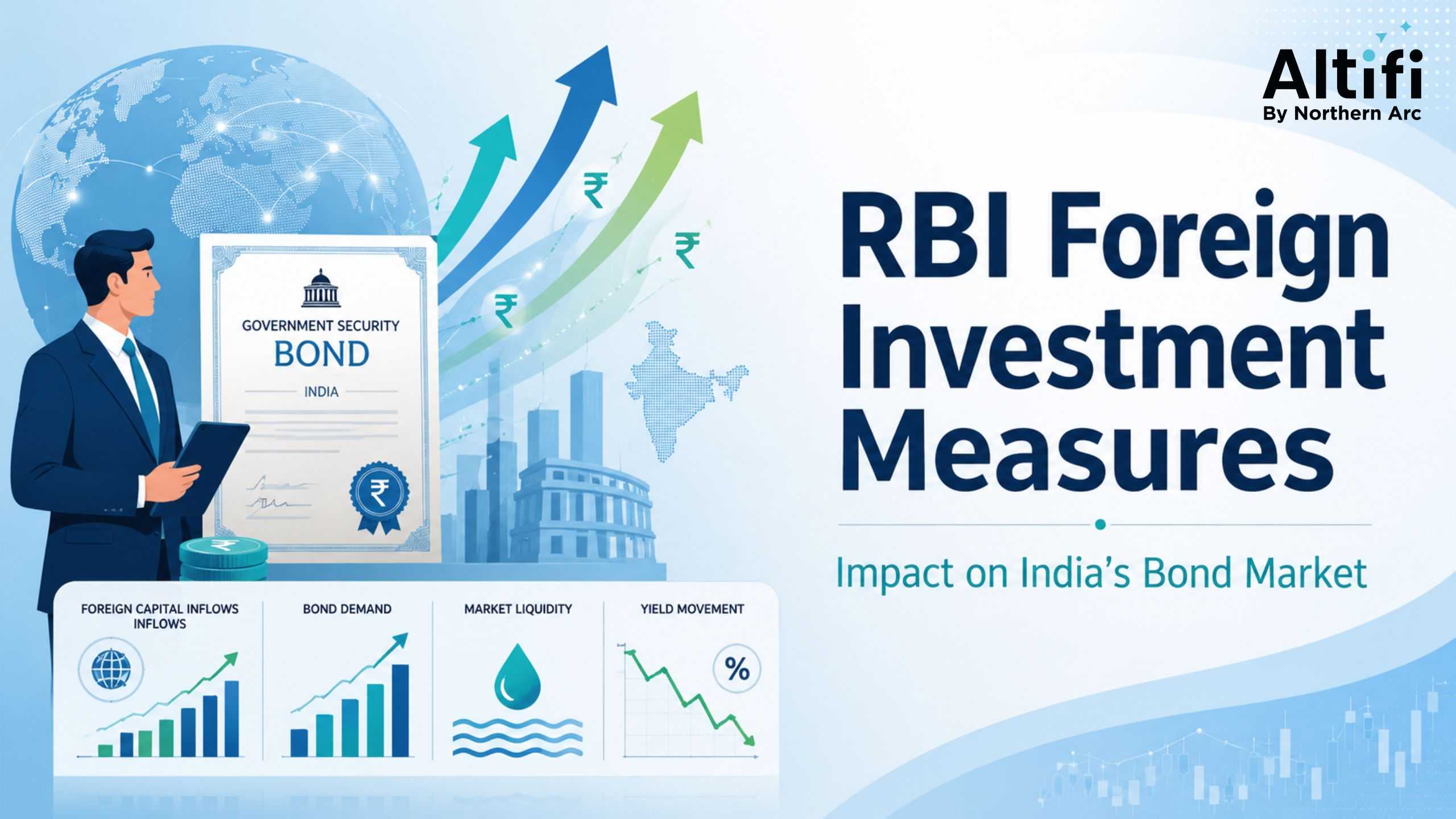
Regulatory changes relating to foreign investor access have altered foreign investor access arrangements in India’s fixed-income market. These changes are intended to make investing in Indian bonds easier and improve overall market activity. Foreign investment may influence bond demand, pricing, and yields across different debt segments. As a result, market participants are closely watching how these measures may affect India's fixed-income market.
What are RBI's New Foreign Investment Measures?
India's efforts to seek more international capital into its bond market are highlighted by recent regulatory and operational measures. The RBI has implemented policies to make it easier for international investors to purchase Indian debt instruments. These modifications are aimed at facilitating broader involvement, simplifying operational procedures, and enhancing market access.
One significant step was the expansion of the Fully Accessible Route (FAR), under which eligible foreign investors can invest in specified government securities (G-Secs) without investment limits. The RBI has also simplified the investment framework by easing certain restrictions applicable to Foreign Portfolio Investors (FPIs) and streamlining investment categories for government debt securities. These measures aim to improve market access and reduce operational complexities for overseas investors.
These initiatives come alongside India's inclusion in major global bond indices like JPMorgan GBI-EM Global Diversified Index. These initiatives may increase international interest in Indian debt markets and support long-term market development.
Why is RBI Encouraging Foreign Investment in Indian Bonds?
Foreign capital may support growth in the domestic bond market and strengthen overall market participation. India requires significant funding to support infrastructure projects, public spending, and business expansion. Through these RBI foreign investment measures, policymakers aim to broaden the investor base and increase demand for debt securities.
A wider investor base may contribute to more active trading and better liquidity. It may also help improve pricing efficiency across different bond maturities.
Greater international participation may further strengthen India's position in global financial markets. This could increase the visibility of Indian bonds among global asset managers and institutional investors.
How Foreign Investment Affects India's Bond Market
Foreign investment may influence bond markets through changes in demand, liquidity, and pricing trends.
When overseas investors allocate funds to Indian bonds, demand for debt securities may increase. Stronger demand may affect both bond prices and yields, particularly in segments that attract institutional interest.
Government Securities (G-Secs) often experience the most visible impact because they are widely preferred by global fixed-income investors.
Impact on Bond Demand and Liquidity
Foreign inflows add buying interest to the bond market and may strengthen demand for securities. As demand increases, trading activity may become more active across various maturities. The impact on bond price is also important because stronger demand may support prices and influence yield movements.
Higher trading volumes generally improve liquidity. This makes it easier for investors to buy and sell bonds without significant price disruptions.
Better liquidity may also support more efficient pricing and narrower bid-ask spreads. Over time, these improvements may contribute to a deeper and more active bond market.
Impact on Bond Yields
Bond prices and bond yields generally move in opposite directions. When foreign investors increase bond purchases, prices may rise because of stronger demand. As prices increase, yields often move lower. This relationship explains why large foreign inflows are sometimes associated with relatively lower yields in specific market segments.
At the same time, yields are influenced by several other factors. Inflation expectations, RBI policy decisions, government borrowing, and global interest rates continue to play important roles.
For this reason, foreign investment should be viewed as one factor among several that affect bond yields.
What Do These Measures Mean for Bond Investors?
These developments may influence bond market conditions that investors regularly monitor. Foreign participation can affect demand levels, liquidity conditions, and pricing across government. Changes in participation levels may therefore influence market activity and yield trends.
Understanding these factors may help investors interpret bond market movements within a broader economic context.
Impact on Government Securities (G-Secs)
Foreign investment may influence the government securities (G-Secs) market through changes in demand, pricing, and overall market activity. When foreign investors increase their allocation to Indian debt instruments, demand for G-Secs may rise. Higher demand may affect bond prices and yields, particularly in segments that attract significant institutional participation.
G-Secs often experience the most visible impact because they are commonly preferred by global fixed-income investors. Increased foreign participation may also support market liquidity and improve trading activity. Over time, these developments may contribute to greater efficiency across the broader bond market, including selected corporate debt securities.
Key Risks and Challenges to Watch
Foreign investment may influence bond markets, but several factors may affect investment flows and market activity.
- Global Interest Rate Changes: Interest rate decisions in major economies may influence foreign investment across global markets.
- Geopolitical Developments: Political events and international tensions may affect investor sentiment and capital allocation decisions.
- Shifts in Global Economic Conditions: Changes in economic growth and market outlooks may influence investment activity in debt markets.
- Monetary Policy Decisions Abroad: Policy actions by major central banks may affect the movement of funds between countries.
- Currency Exchange Rate Movements: Exchange rate fluctuations may affect investment returns and foreign investor participation.
- Domestic Inflation Trends: Inflation levels may influence bond yields and overall fixed-income market performance.
- Fiscal Policy Developments: Government borrowing and spending decisions may affect demand and supply conditions in bond markets.
- RBI Policy and Market Operations: RBI measures and liquidity management activities may influence bond market conditions over time.
Conclusion
The RBI's recent measures are intended to make India's bond market more accessible to global investors. Broader foreign participation may influence bond demand, liquidity, and yield movements across both government and corporate debt markets. However, foreign investment is only one factor affecting bond performance. Market results are still influenced by global economic conditions, government borrowing, inflation, and monetary policy. Investors may better understand changes in India's fixed-income market by being aware of these aspects.
FAQs
What are RBI's new foreign investment measures?
RBI's recent measures aim to improve accessibility, streamline investment processes, and encourage greater foreign participation in India's bond market.
How can foreign investment influence India's bond market?
Foreign investment may affect bond demand, market liquidity, pricing efficiency, and yield movements across government and corporate debt securities.
What do these measures mean for retail bond investors?
Retail investors may observe changes in liquidity, bond pricing, and yield trends as foreign participation in the bond market evolves.
Can increased foreign participation affect bond yields?
Yes, stronger foreign demand may support bond prices and influence yields, although yields are also affected by economic and market factors.
Disclaimer:
The information contained in this Article (“Article”) is for general informational purposes only. Northern Arc Capital Limited (“Northern Arc”) does not make any warranties about the completeness, reliability, and accuracy of this information. Any action you take upon the information contained in this Article is strictly at your own risk, and Northern Arc will not be liable for any losses and damages in connection with the use of our Article.
The data included in this Article has been obtained from sources that are believed to be reliable and accurate at the time of publication. However, Northern Arc does not guarantee the accuracy or completeness of any information, nor does it assume any responsibility or liability for any errors or omissions therein. Any opinions expressed herein are subject to change without notice and Northern Arc is under no obligation to update or keep current the information contained in this Article.
This Article is not intended to constitute, and should not be construed as, investment advice or a recommendation to purchase, sell, or hold any security or to engage in any investment strategy or transaction. Readers should not rely solely on the information provided in this Article for making investment decisions and should conduct their own due diligence or seek the advice of a qualified professional.
The content of this Article is for informational purposes only and is not a solicitation or an offer to buy or sell any securities or financial instruments. Northern Arc is not responsible for any investment decisions made by the recipients of this Article. Readers should take independent financial advice from a qualified professional in connection with, or independently research and verify, any information that is provided in this Article and wish to rely upon, whether for the purpose of making an investment decision or otherwise.
Northern Arc and its affiliates, directors, employees, and agents expressly disclaim any and all liability for any direct or indirect losses, damages, or expenses of any kind arising out of or relating to the use of this Article, including but not limited to, any losses related to the accuracy, completeness, timeliness, or reliability of such information.
This Article may contain forward-looking statements that are based on current expectations, estimates, forecasts, and projections about the markets in which Northern Arc operates, as well as management’s beliefs and assumptions. Forward-looking statements are not guarantees of future performance and involve certain risks and uncertainties, which are difficult to predict. Past performance is not indicative of future results.
This report is intended solely for the recipient and is not for further circulation. Any distribution, modification, reproduction, or disclosure of the contents of this Article, in whole or in part, without the prior written consent of Northern Arc, is strictly prohibited.