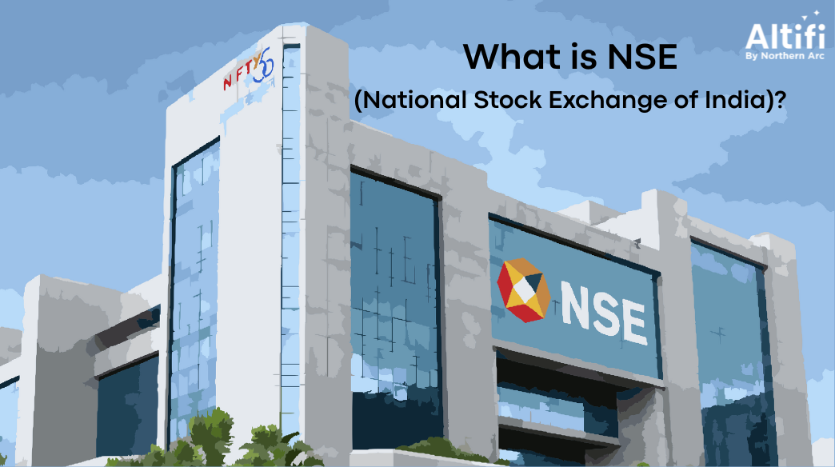
What is the NSE, or National Stock Exchange of India?
The National Stock Exchange of India (NSE) is the biggest stock exchange in India and a key part of the country's financial system. It offers a fully electronic market where investors can buy and sell securities, find fair prices, and help the Indian economy grow.
Every day, millions of retail and institutional investors buy and sell stocks, bonds, and derivatives through the NSE. The exchange is very important for India's economic growth because it makes price discovery and capital allocation more open and efficient.
How the NSE Started
The NSE started trading in 1994, but it wasn't until 1992 that it was set up. Before it was made, India's capital markets were mostly controlled by manual trading and had limited access to other parts of the country.
At that time, most stock trading in India happened on physical trading floors and was mostly limited to big cities. The NSE started screen-based electronic trading, which lets investors from all over the country place orders from anywhere. This change made the market much more efficient, open, and accessible.
What the NSE Does Now
The NSE is now a multi-asset exchange that makes it easy to trade in a number of important areas.
Shares of publicly traded companies are called equities.
Government bonds and corporate bonds are both types of debt markets.
Futures and options contracts are examples of derivatives.
The NSE does more than just trading; it also handles clearing and settlement. These systems make sure that transactions are finished safely, correctly, and on time. The exchange's infrastructure is built to handle a lot of trading while keeping the market stable.
The NSE's Role in India's Economy
The NSE is an important link between businesses that need money and investors who want to grow their wealth. It helps businesses get money at competitive prices and gives investors access to reliable pricing by providing a clear and efficient marketplace.
The exchange also helps with financial inclusion by making it easier for investors from different areas to get into the market. The fact that it puts a lot of emphasis on technology, governance, and protecting investors has helped people trust India's capital markets, both in India and around the world.
The NSE and Market Indices
The NSE creates and keeps up several benchmark indices that show how different parts of the market are doing. Investors, fund managers, and analysts often use these indices as reference points.
One of the most closely watched indices shows how well large, liquid companies in major sectors of the Indian economy are doing. People often use these kinds of indices to get a sense of how the market as a whole feels and to check on the health of the economy as a whole.
The Technology And Infrastructure Of The Market
The NSE runs on technology. Advanced systems make it possible to trade automatically, manage risk in real time, and keep an eye on the market all the time. This infrastructure lets the exchange handle thousands of transactions every second while keeping an eye on risks in real time.
Nationwide electronic connectivity makes it easy for investors and market participants to trade from anywhere in the country. The NSE has been able to grow and stay strong during times of high market activity thanks to ongoing investments in technology.
Governance and Protecting Investors
Strong rules for governance set the rules for how the NSE works. The exchange works within a strong set of rules that are meant to protect the interests of investors.
To make sure that the market is fair, there are clear trading rules, advanced surveillance systems, and constant monitoring. These steps have helped investors and other market participants build trust over time.
For Investors And Companies, The Nse Has Many Benefits
The NSE gives investors a lot of options for trading, including high liquidity, quick price discovery, and access to a wide range of financial instruments.
Listing on the NSE gives businesses more visibility, credibility, and access to a large and varied pool of capital. This ecosystem helps businesses and investors grow in a way that is good for the environment.
The NSE's Future Role
The NSE's role is likely to grow even more as India's financial markets get bigger. The exchange's position as a market leader is getting stronger because more people are using it, more digital tools are being used, and new financial products are being introduced.
Its continued focus on technology, educating investors, and keeping the market honest will help make sure that the capital market ecosystem stays strong and works well in the years to come.
Questions and Answers (FAQs)
What is the Indian National Stock Exchange?
The NSE is India's biggest stock exchange. It has a fully electronic platform for trading stocks, bonds, and derivatives.
When did the NSE start?
The NSE was set up in 1992 and started trading in 1994.
What sets the NSE apart from older exchanges?
The NSE was the first exchange in India to offer fully automated, screen-based trading, which made trading floors unnecessary.
What kinds of things can you trade on the NSE?
The NSE lets people trade stocks, corporate bonds, government securities, treasury bills, commercial papers, and derivatives like options and futures.
Why do investors care about the NSE?
It has technology and rules behind it that make it easy to find the right price, have a lot of money available, settle trades quickly, and protect investors.
Conclusion:
The National Stock Exchange of India has been a big part of making India's financial markets more modern. The NSE has made investing easier, more reliable, and more efficient by being the first to use electronic trading and keeping high standards of transparency and governance.
The NSE is
still an important part of India's financial system. It connects investors,
companies, and capital through a modern and trusted marketplace as the
country's economy grows and more people invest in capital markets.
Disclaimer:
The information contained in this Article (“Article”) is for general informational purposes only. Northern Arc Capital Limited (“Northern Arc”) does not make any warranties about the completeness, reliability, and accuracy of this information. Any action you take upon the information contained in this Article is strictly at your own risk, and Northern Arc will not be liable for any losses and damages in connection with the use of our Article.
The data included in this Article has been obtained from sources that are believed to be reliable and accurate at the time of publication. However, Northern Arc does not guarantee the accuracy or completeness of any information, nor does it assume any responsibility or liability for any errors or omissions therein. Any opinions expressed herein are subject to change without notice and Northern Arc is under no obligation to update or keep current the information contained in this Article.
This Article is not intended to constitute, and should not be construed as, investment advice or a recommendation to purchase, sell, or hold any security or to engage in any investment strategy or transaction. Readers should not rely solely on the information provided in this Article for making investment decisions and should conduct their own due diligence or seek the advice of a qualified professional.
The content of this Article is for informational purposes only and is not a solicitation or an offer to buy or sell any securities or financial instruments. Northern Arc is not responsible for any investment decisions made by the recipients of this Article. Readers should take independent financial advice from a qualified professional in connection with, or independently research and verify, any information that is provided in this Article and wish to rely upon, whether for the purpose of making an investment decision or otherwise.
Northern Arc and its affiliates, directors, employees, and agents expressly disclaim any and all liability for any direct or indirect losses, damages, or expenses of any kind arising out of or relating to the use of this Article, including but not limited to, any losses related to the accuracy, completeness, timeliness, or reliability of such information.
This Article may contain forward-looking statements that are based on current expectations, estimates, forecasts, and projections about the markets in which Northern Arc operates, as well as management’s beliefs and assumptions. Forward-looking statements are not guarantees of future performance and involve certain risks and uncertainties, which are difficult to predict. Past performance is not indicative of future results.
This report is intended solely for the recipient and is not for further circulation. Any distribution, modification, reproduction, or disclosure of the contents of this Article, in whole or in part, without the prior written consent of Northern Arc, is strictly prohibited.