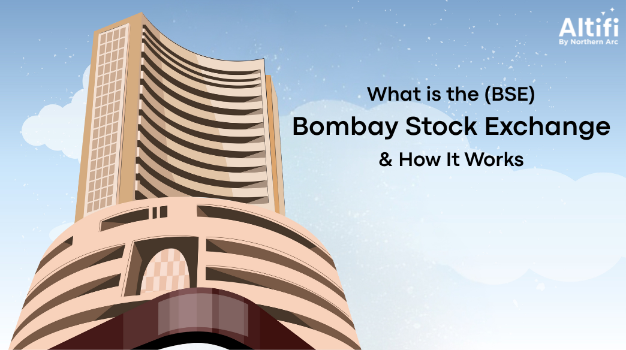
One of the most significant cornerstones of India's financial system is the Bombay Stock Exchange (BSE). Established in 1875, it is the oldest stock exchange in Asia and among the biggest globally in terms of the quantity of listed firms. The BSE, which has its headquarters in Mumbai, offers a regulated and transparent marketplace for investors to purchase and sell financial instruments and take part in the expansion of the Indian economy.
The BSE has developed over the years from a modest association of brokers to a
cutting-edge, technologically advanced exchange that links millions of
investors with companies in need of funding.
A Synopsis of the BSE's Past
A group of stockbrokers in Mumbai started dealing under a banyan tree in the late 19th century, which is when the BSE had its start. Later, this unofficial organization evolved into the Native Share and Stock Brokers' Association, which in turn gave rise to the Bombay Stock Exchange as it exists today.
The BSE transitioned from an open outcry trading system to
purely electronic trading in 1995, marking a significant advancement. This
shift brought Indian capital markets into compliance with international norms
by increasing speed, accuracy, and transparency.
How Does Today's BSE Operate?
The Bombay Stock Exchange functions as a multi-asset marketplace today. It permits trading in a variety of financial instruments, such as:
• Debt instruments like government securities and corporate bonds.
• Derivatives like futures and options.
• Equities (shares of listed businesses).
• Currency products and mutual funds
In addition to trading, the BSE oversees clearing,
settlement, and risk management, making sure that deals are carried out
effectively and safely even during spikes in market activity.
The BSE's Function in the Indian Economy
In order to connect investors and businesses, the BSE is essential. Listings help businesses generate money, and regulated and transparent markets give investors the chance to increase their wealth.
The exchange facilitates broad market access and equitable
price discovery, which promotes long-term economic growth and financial
inclusion. Trust in India's financial markets has grown both domestically and
internationally as a result of its strong emphasis on governance, technology,
and investor protection.
The Sensex and Market Indices
The Sensex, a benchmark index that monitors the performance of 30 sizable and actively traded firms across important sectors of the Indian economy, is among the BSE's most well-known contributions.
The Sensex is frequently used to gauge the state of the
economy and market mood. Changes in the index frequently mirror more general
patterns in investment activity, company confidence, and the state of the
economy.
Infrastructure and Technology at the BSE
The Bombay Stock Exchange revolves around technology. High-speed order execution, real-time market monitoring, strong risk management, and dependable clearing and settlement are all made possible by sophisticated trading systems.
The exchange is able to conduct millions of trades per day
while preserving the resilience and stability of the market thanks to this
digital infrastructure.
Protection of Investors and Governance
The BSE's operations are defined by strict governance rules. The exchange is subject to stringent regulations that are intended to safeguard the interests of investors.
Fair practices are ensured through sophisticated monitoring
technologies, ongoing market surveillance, and transparent trading regulations.
These protections have been crucial in preserving investors' and market
participants' long-term trust.
The BSE's advantages for businesses and investors
The BSE provides investors with the following benefits:
• Access to a large variety of financial products.
• Fully electronic and transparent trading.
• High liquidity and effective price discovery.
Listing on the BSE gives businesses access to a wide range
of financing, visibility, and reputation. As a result, a balanced ecosystem is
produced that promotes long-term growth for investors and companies alike.
The Bombay Stock Exchange's Prospects
It is anticipated that the BSE's significance would increase
as India's economy grows. Its position as a premier exchange is being
reinforced by the introduction of new financial products, growing retail
participation, and expanded usage of digital investment tools.
The BSE is in a strong position to assist the subsequent stage of the growth of
the Indian capital market as long as it maintains its emphasis on innovation,
education, and market integrity.
FAQs, or frequently asked questions
The Bombay Stock Exchange: What is it?
A significant venue for trading stocks, debt instruments, derivatives, and other assets, the Bombay Stock Exchange is the oldest stock exchange in India.
The BSE was founded when?
The BSE is the earliest stock exchange in Asia, having been established in 1875.
Why is the BSE significant?
The BSE is essential to India's financial system because it facilitates capital generation, clear price discovery, investor protection, and effective trade.
What is available for trading on the BSE?
Shares, corporate bonds, government securities, mutual funds, derivatives, and currency-related products are all available for trading by investors.
What is the Sensex?
The BSE's benchmark index, the Sensex, represents 30
significant businesses in important areas of the Indian economy.
Conclusion
India's financial markets have been significantly shaped by
the Bombay Stock Exchange. Transparency, efficiency, and investor trust have
been the BSE's constant priorities from its early days to its contemporary,
technologically advanced operations.
The BSE continues to be a vital component of the financial ecosystem, linking
capital, businesses, and investors through a trustworthy and well-respected
marketplace as market participation rises and India's economy changes.
Disclaimer:
The information contained in this Article (“Article”) is for general informational purposes only. Northern Arc Capital Limited (“Northern Arc”) does not make any warranties about the completeness, reliability, and accuracy of this information. Any action you take upon the information contained in this Article is strictly at your own risk, and Northern Arc will not be liable for any losses and damages in connection with the use of our Article.
The data included in this Article has been obtained from sources that are believed to be reliable and accurate at the time of publication. However, Northern Arc does not guarantee the accuracy or completeness of any information, nor does it assume any responsibility or liability for any errors or omissions therein. Any opinions expressed herein are subject to change without notice and Northern Arc is under no obligation to update or keep current the information contained in this Article.
This Article is not intended to constitute, and should not be construed as, investment advice or a recommendation to purchase, sell, or hold any security or to engage in any investment strategy or transaction. Readers should not rely solely on the information provided in this Article for making investment decisions and should conduct their own due diligence or seek the advice of a qualified professional.
The content of this Article is for informational purposes only and is not a solicitation or an offer to buy or sell any securities or financial instruments. Northern Arc is not responsible for any investment decisions made by the recipients of this Article. Readers should take independent financial advice from a qualified professional in connection with, or independently research and verify, any information that is provided in this Article and wish to rely upon, whether for the purpose of making an investment decision or otherwise.
Northern Arc and its affiliates, directors, employees, and agents expressly disclaim any and all liability for any direct or indirect losses, damages, or expenses of any kind arising out of or relating to the use of this Article, including but not limited to, any losses related to the accuracy, completeness, timeliness, or reliability of such information.
This Article may contain forward-looking statements that are based on current expectations, estimates, forecasts, and projections about the markets in which Northern Arc operates, as well as management’s beliefs and assumptions. Forward-looking statements are not guarantees of future performance and involve certain risks and uncertainties, which are difficult to predict. Past performance is not indicative of future results.
This report is intended solely for the recipient and is not for further circulation. Any distribution, modification, reproduction, or disclosure of the contents of this Article, in whole or in part, without the prior written consent of Northern Arc, is strictly prohibited.