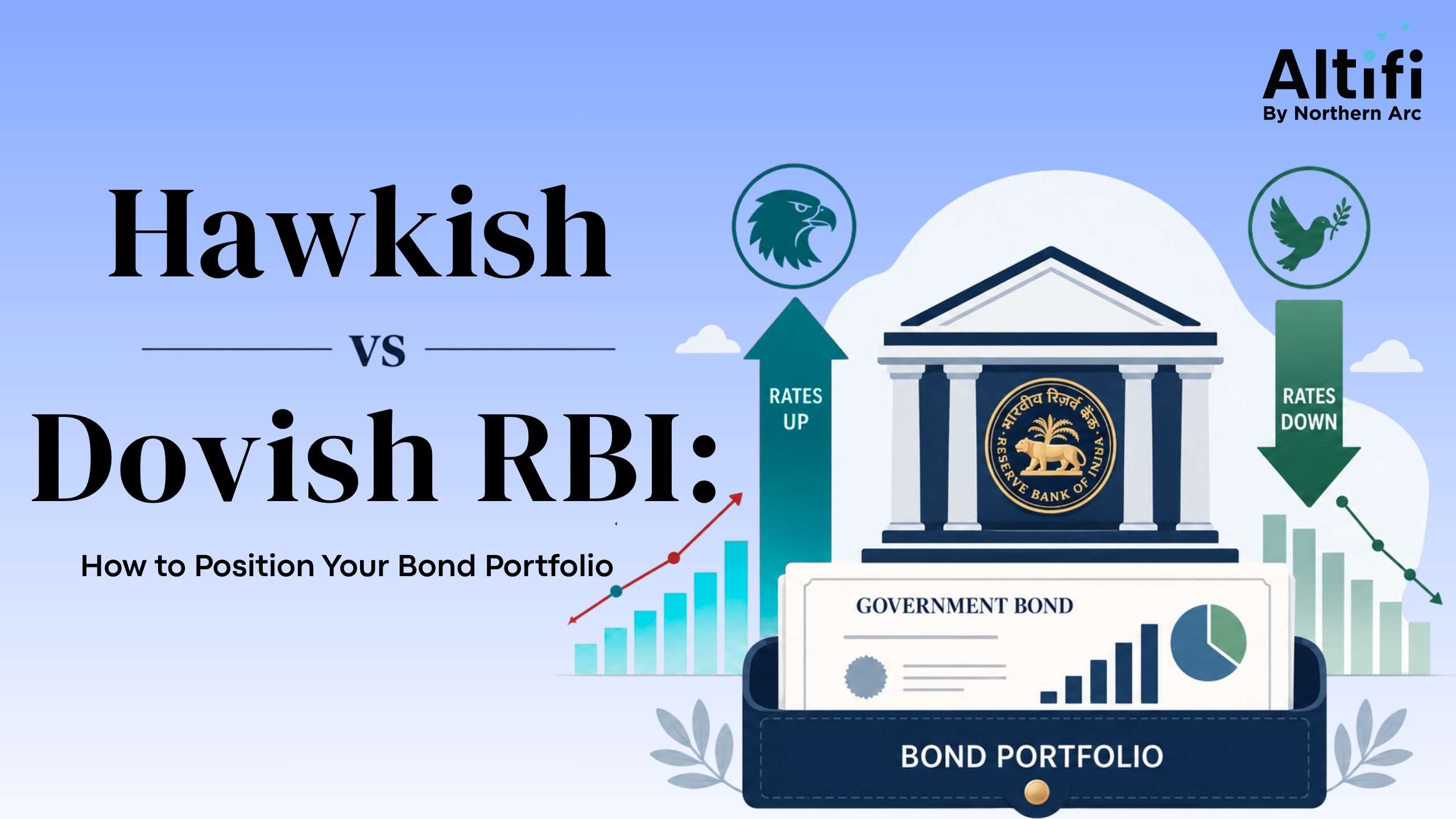
Monetary policy decisions can have a significant impact on interest rates, inflation, economic growth, and financial markets. When central banks such as the Reserve Bank of India (RBI) adopt a hawkish stance, they prioritise controlling inflation through tighter monetary measures. In contrast, a dovish stance focuses on stimulating economic activity by keeping interest rates lower. Understanding the difference between hawkish and dovish monetary policy can help investors anticipate market movements and make more informed investment decisions.
What is a Hawkish Monetary Policy?
A hawkish stance generally means that a central bank is prioritising inflation control and is willing to maintain or tighten monetary policy if necessary to keep inflation in check. To bring inflation under control, the central bank can increase interest rates or indicate that further rate increases may be implemented in the future. It becomes harder and more expensive to borrow funds, which reduces consumer expenditure and dampens demand in the economy. A hawkish tone is usually noticed when the inflation is higher than desirable for the central bank.
What is a Dovish Monetary Policy?
The dovish stance, on the other hand, is the opposite, where the emphasis is on fostering economic growth and employment instead of fighting inflation. A central bank may adopt a more dovish approach by lowering interest rates or signalling that rates could decline to encourage spending, investments and business growth. The dovish approach may become more likely when economic growth is weakening and inflation is sufficiently contained.
Hawkish vs Dovish Monetary Policy: Key Differences
The following table explains the key differences between hawkish vs dovish monetary policy.
Aspect | Hawkish Policy | Dovish Policy |
Primary goal | Control inflation | Support growth |
Interest rate direction | Rates raised or held high | Rates cut or held low |
Borrowing cost | Increases | Decreases |
Impact on currency | May strengthen | May weaken |
Impact on equity markets | May pressure valuations | May support valuations |
Typical trigger | Rising inflation | Slowing growth or low inflation |
What Factors Influence the RBI's Monetary Policy Stance?
The stance decision of the MPC of the RBI is not taken in isolation. Every bi-monthly review policy review considers a range of economic and financial indicators, and the relative importance of each indicator varies according to the state of the economy.
Inflation Trends
Inflation is measured primarily through the Consumer Price Index (CPI), and this is the number the MPC monitors most closely. The RBI targets CPI inflation within a band of 4%, plus or minus 2%. Once inflation moves toward or past the upper end of this range, particularly if the increase looks likely to persist rather than reverse on its own, a hawkish response becomes more probable.
Economic Growth Data
GDP growth, industrial production, and consumer demand form the other half of the equation. If growth is slowing or private investment is weak, the MPC has more room to justify a rate cut, provided inflation is not standing in the way.
Global Cues
Domestic policy does not operate independently of global conditions. Crude oil prices affect India's import bill directly, and rate decisions from the US Federal Reserve influence capital flows into and out of Indian markets. Significant movements in global oil prices, global interest rates or capital flows may influence the RBI's assessment, particularly when they affect India's inflation or external-sector outlook.
Currency and Capital Flows
A weakening rupee or a slowdown in foreign portfolio inflows may also factor into the RBI's thinking, since interest rate differentials influence how attractive Indian debt and equity markets look to overseas investors.
How to Identify a Hawkish or Dovish RBI Policy
Investors do not need to guess; the RBI's own explanations and actions usually offer insights. Here’s how you can figure it out.
Monitor the Repo Rate Decision
A rate hike implies a hawkish approach, while a rate cut implies a dovish stance. In case the rates remain unchanged, then the accompanying commentary is important.
Check the Policy Statement Bias
The use of words like "vigilant on inflation" and "withdrawal of accommodation" usually implies a hawkish bias, while phrases like "support growth" and "accommodative stance" imply a dovish outlook.
Watch for the Official Bias Statement
The RBI usually makes its stance explicit, like neutral, accommodative or withdrawal of accommodation, making it clear of the direction it is headed.
How Do Hawkish and Dovish Policies Affect Financial Markets?
Financial markets react immediately after the stance becomes clear.
Equity Markets
Hawkish signals could cause a negative impact on stocks, particularly in rate-sensitive industries such as banking, automobiles, and property, because increased interest rates would hurt their margins and demand. Signals that are dovish in nature are generally seen positively by the stock market.
Bond Markets
Bond yields generally move up when the stance turns hawkish, causing existing bond prices to fall. A dovish stance may push yields lower and support bond portfolio prices.
Currency Markets
A hawkish policy may attract foreign capital seeking higher returns, which may support the rupee. A dovish policy may have the opposite effect.
How Do Hawkish and Dovish Policies Affect Investors?
Once the RBI takes a stance, the effects may filter down to individual investment decisions.
Fixed Income Investors
When rates rise, new bonds and fixed deposits may offer better returns, but the value of existing bonds may fall. In a dovish phase, the reverse tends to happen.
Equity Investors
Rate-sensitive sectors may see more volatility around policy announcements. A diversified portfolio may help manage this swing regardless of the RBI's direction.
Borrowers and EMI Payers
A hawkish policy could raise EMIs on floating-rate loans, while a dovish policy may bring some relief on borrowing costs.
Historical Examples of Hawkish and Dovish RBI Policies
- Between May and December 2022, the RBI hiked the repo rate from 4.0% to 6.25% in five moves, as the headline inflation consistently remaining above 4% and sometimes going beyond the upper tolerance band of 6%.
This combination of hikes with the explicit communication of "withdrawal of accommodation" signalled a clear and obvious hawkish stance on the part of RBI to bring inflation back on track, even if at the expense of increased interest rates and lower demand.
- Until December 2023, the repo rate remained at 6.50%, which means that the RBI signalled a hawkish leaning pause, because the tightening cycle came to an end, but the RBI kept policy rates high, and the liquidity was still tight in order to make sure that inflation would not accelerate again.
- From February to December 2025, the RBI reduced the repo rate from 6.50% to 5.25% (6.50 → 6.25 → 6.00 → 5.50 → 5.25) due to lower inflation and growing concern about economic growth, signalling thus that its monetary policy became more dovish and accommodative.
- In 2026 so far, the RBI left the repo rate unchanged at 5.25%, with the clear indication being that the committee is "neither hawkish nor dovish", and its policy is in the neutral and data-dependent "long pause" phase.
Conclusion
Hawkish and dovish are simply two ends of the spectrum that describe how a central bank balances inflation control against growth support. The hawkish and the dovish approaches are just the two ends of a continuum that defines the efforts a central bank undertakes in balancing the two factors, namely inflation and growth. Neither of the approaches is permanently good or bad, as the approaches depend entirely on the situation at that point in time. For the investor, keeping an eye on the RBI's statements and its interest rate decisions can be helpful in the context of portfolio choices. Staying informed about these shifts, rather than reacting to headlines alone, may help in making more balanced investment decisions.
Frequently Asked Questions (FAQs)
What is a hawkish RBI stance?
A hawkish stance means the RBI is prioritising inflation control, often through higher interest rates or a tighter monetary policy approach.
What is a dovish RBI stance?
A dovish stance means the RBI is prioritising economic growth, typically through lower interest rates or an accommodative policy approach.
What happens to my investments when RBI turns hawkish?
Investments in rate-sensitive equity sectors may come under pressure, bond prices might fall down, but new issues of fixed income products may have comparatively higher interest rates.
How does the RBI decide whether to be hawkish or dovish?
The Monetary Policy Committee of the RBI looks into several factors before adopting its stance.
What does RBI's current neutral stance mean for investors?
This indicates that the RBI is flexible with regard to its future actions. It may either raise or cut the interest rates, depending on the future data received.
What happens when RBI turns hawkish?
If RBI turns hawkish, interest rates can increase, spending may fall and so can borrowing. The stock market, and sectors like real estate and automobiles can be under pressure.
What does dovish monetary policy mean?
It is the policy where a central bank concentrates on reducing interest rates.
Disclaimer:
The information contained in this newsletter (“Newsletter”) is for general informational purposes only. Northern Arc Capital Limited (“Northern Arc”) does not make any warranties about the completeness, reliability, and accuracy of this information. Any action you take upon the information contained in this Newsletter is strictly at your own risk, and Northern Arc will not be liable for any losses and damages in connection with the use of our Newsletter.
The data included in this Newsletter has been obtained from sources that are believed to be reliable and accurate at the time of publication. However, Northern Arc does not guarantee the accuracy or completeness of any information, nor does it assume any responsibility or liability for any errors or omissions therein. Any opinions expressed herein are subject to change without notice and Northern Arc is under no obligation to update or keep current the information contained in this Newsletter.
This Newsletter is not intended to constitute, and should not be construed as, investment advice or a recommendation to purchase, sell, or hold any security or to engage in any investment strategy or transaction. Readers should not rely solely on the information provided in this Newsletter for making investment decisions and should conduct their own due diligence or seek the advice of a qualified professional.
The content of this Newsletter is for informational purposes only and is not a solicitation or an offer to buy or sell any securities or financial instruments. Northern Arc is not responsible for any investment decisions made by the recipients of this Newsletter. Readers should take independent financial advice from a qualified professional in connection with, or independently research and verify, any information that is provided in this Newsletter and wish to rely upon, whether for the purpose of making an investment decision or otherwise.
Northern Arc and its affiliates, directors, employees, and agents expressly disclaim any and all liability for any direct or indirect losses, damages, or expenses of any kind arising out of or relating to the use of this Newsletter, including but not limited to, any losses related to the accuracy, completeness, timeliness, or reliability of such information.
This Newsletter may contain forward-looking statements that are based on current expectations, estimates, forecasts, and projections about the markets in which Northern Arc operates, as well as management’s beliefs and assumptions. Forward-looking statements are not guarantees of future performance and involve certain risks and uncertainties, which are difficult to predict. Past performance is not indicative of future results.
This report is intended solely for the recipient and is not for further circulation. Any distribution, modification, reproduction, or disclosure of the contents of this Newsletter, in whole or in part, without the prior written consent of Northern Arc, is strictly prohibited.